🔥 Materials & Craftsmanship
Damascus Steel: History, Patterns and Modern Usage
By SwordPath Editorial Team · Published · 8 min read
The historical material
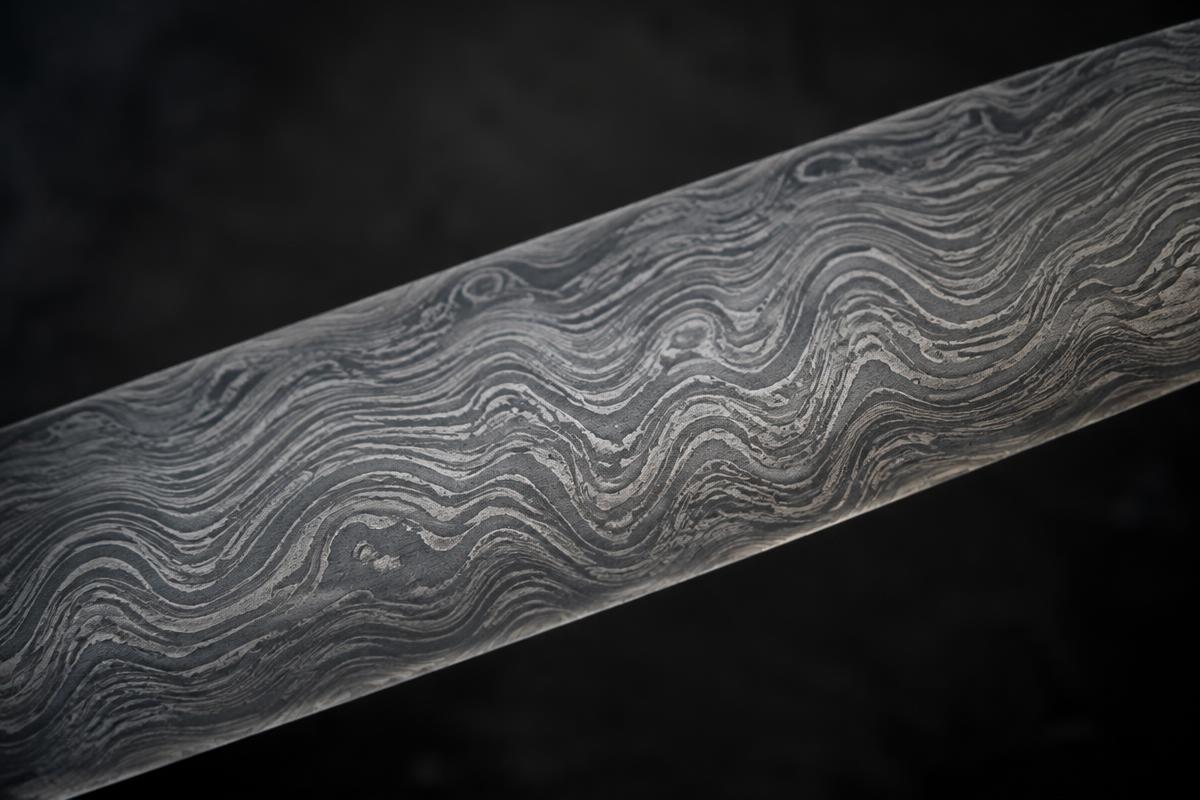
Damascus blades were prized in the Middle East from the medieval period onward. The steel itself came largely from crucible steel ingots produced in South Asia, and the characteristic watered pattern (sometimes called 'damask') emerged from carbide bands in the steel [1][2].
The name likely relates to the city of Damascus as a trade and manufacturing centre, though the exact origin of the term is debated [1].
What research has found
Verhoeven and colleagues showed that small amounts of impurities such as vanadium played a key role in forming the carbide bands responsible for the pattern, and they reproduced the pattern experimentally [2].
A 2006 study reported carbon nanotubes and cementite nanowires in a 17th-century sabre [3]. This finding is sometimes exaggerated online; it does not mean historical smiths understood or intended nanotechnology.
Modern 'Damascus'
| Historical (crucible / wootz) | Modern pattern-welded | |
|---|---|---|
| Material | Single high-carbon crucible steel | Two or more steels layered |
| Source of pattern | Carbide banding within the steel | Contrasting layers revealed by etching |
| Common today? | Rare, made by few specialists | Very common in knives and decorative swords |
Frequently asked questions
Is Damascus steel the strongest steel?
No. Modern tool and alloy steels outperform it. Historical Damascus was impressive for its time.
Is the secret of Damascus steel 'lost'?
Production declined and techniques were not well documented, but modern researchers and smiths have reproduced comparable patterns [2].
Sources
✍️ Found an error? Report a correction. Written and edited by the SwordPath Editorial Team; not externally expert-reviewed. See our editorial policy.