🔥 Materials & Craftsmanship
How Medieval European Swords Were Made
By SwordPath Editorial Team · Published · 10 min read
1. Making the metal
Before the blast furnace became widespread in late medieval Europe, iron was made in bloomeries: furnaces that reduced iron ore with charcoal into a spongy mass called a bloom. The carbon content of the result varied, so smiths had to sort and consolidate material carefully [1].
Metallurgical analysis of surviving swords shows wide variation in quality — from soft iron to well-hardened steel — which reflects both the raw material and the smith's skill [1].
2. Pattern welding and its decline
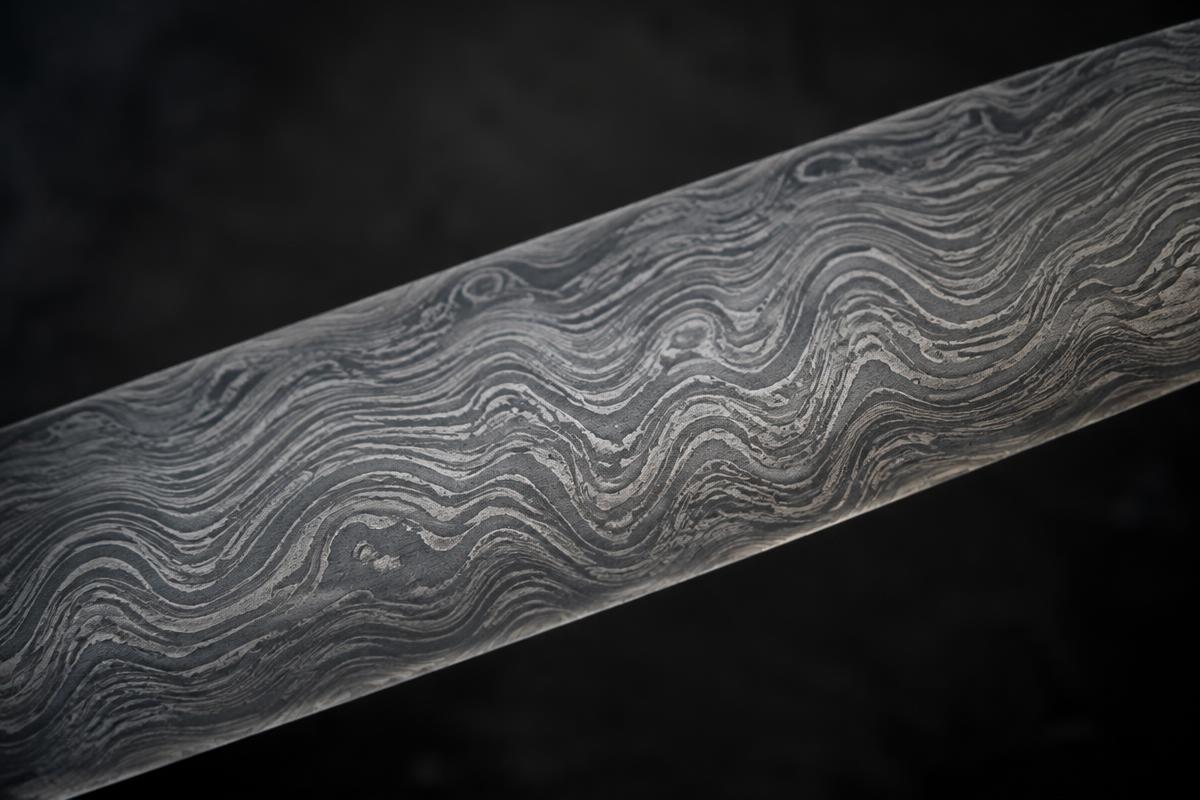
In the early medieval period many blades were pattern welded: rods of iron and steel twisted and forge-welded together, producing decorative patterns. As better homogeneous steel became available, pattern welding largely disappeared from European swords by around the 10th–11th centuries [1][2].
3. Forging and grinding
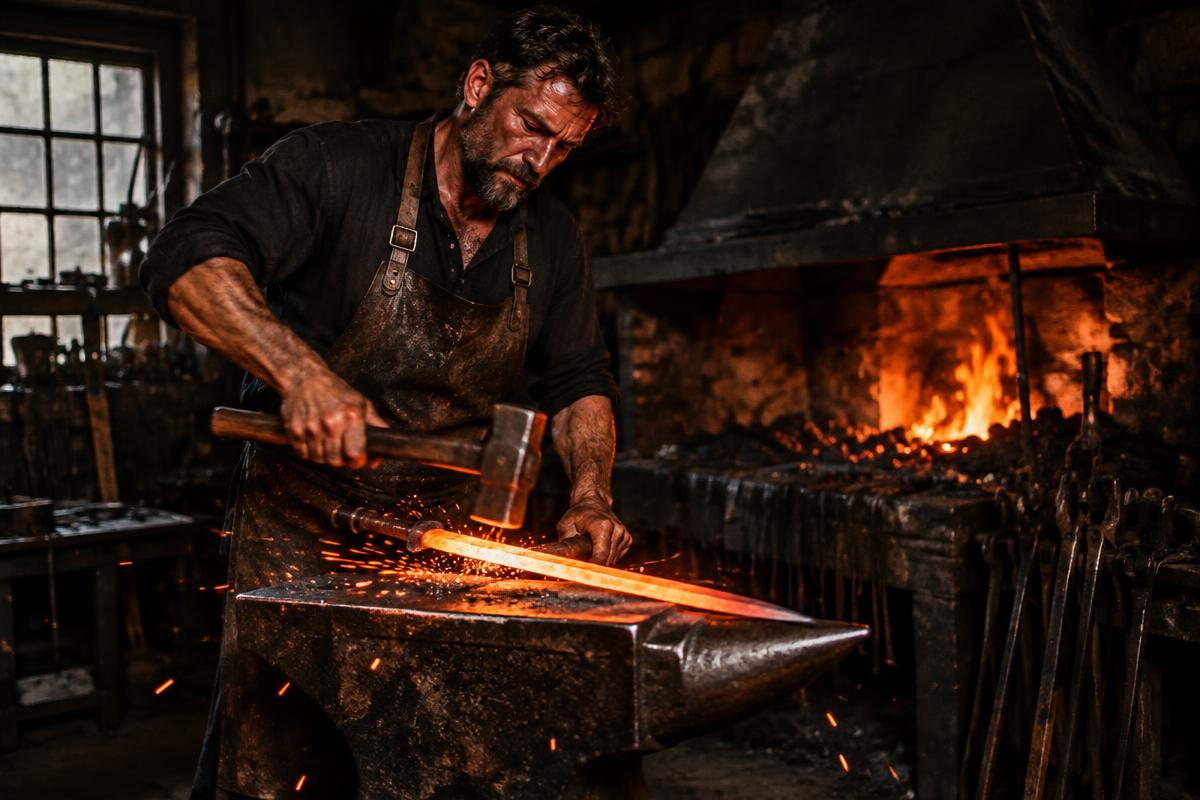
The smith drew out the blade, formed the tang, and forged in features such as the fuller (the groove that lightens the blade without weakening it significantly). Final shaping and sharpening were done by grinding and polishing.
4. Heat treatment
Steel can be hardened by heating and quenching, then tempered at a lower temperature to reduce brittleness. Williams's analyses show that quenching was used in many — but not all — medieval blades, and some were quenched without effective tempering [1].
5. Hilting
Cross-guard, grip and pommel were fitted over the tang, with the tang end typically peened over the pommel to lock everything in place. In major centres such as Passau and Solingen, blade-making and hilting were often separate trades [3].
Frequently asked questions
How long did it take to make a medieval sword?
We have not found reliable documentary evidence giving a typical figure, and it would have varied widely. Modern reconstructions are not proof of medieval practice.
Were medieval swords made of steel?
Many were, at least partly. Quality ranged from mostly iron to well-hardened steel.
Sources
- Alan Williams, The Sword and the Crucible: A History of the Metallurgy of European Swords up to the 16th Century (Brill, 2012) — print book
- Encyclopaedia Britannica, “Sword”
- Royal Armouries, collections online
✍️ Found an error? Report a correction. Written and edited by the SwordPath Editorial Team; not externally expert-reviewed. See our editorial policy.