📖 Guides & Terminology
What Are the Main Parts of a Sword?
By SwordPath Editorial Team · Published · 6 min read
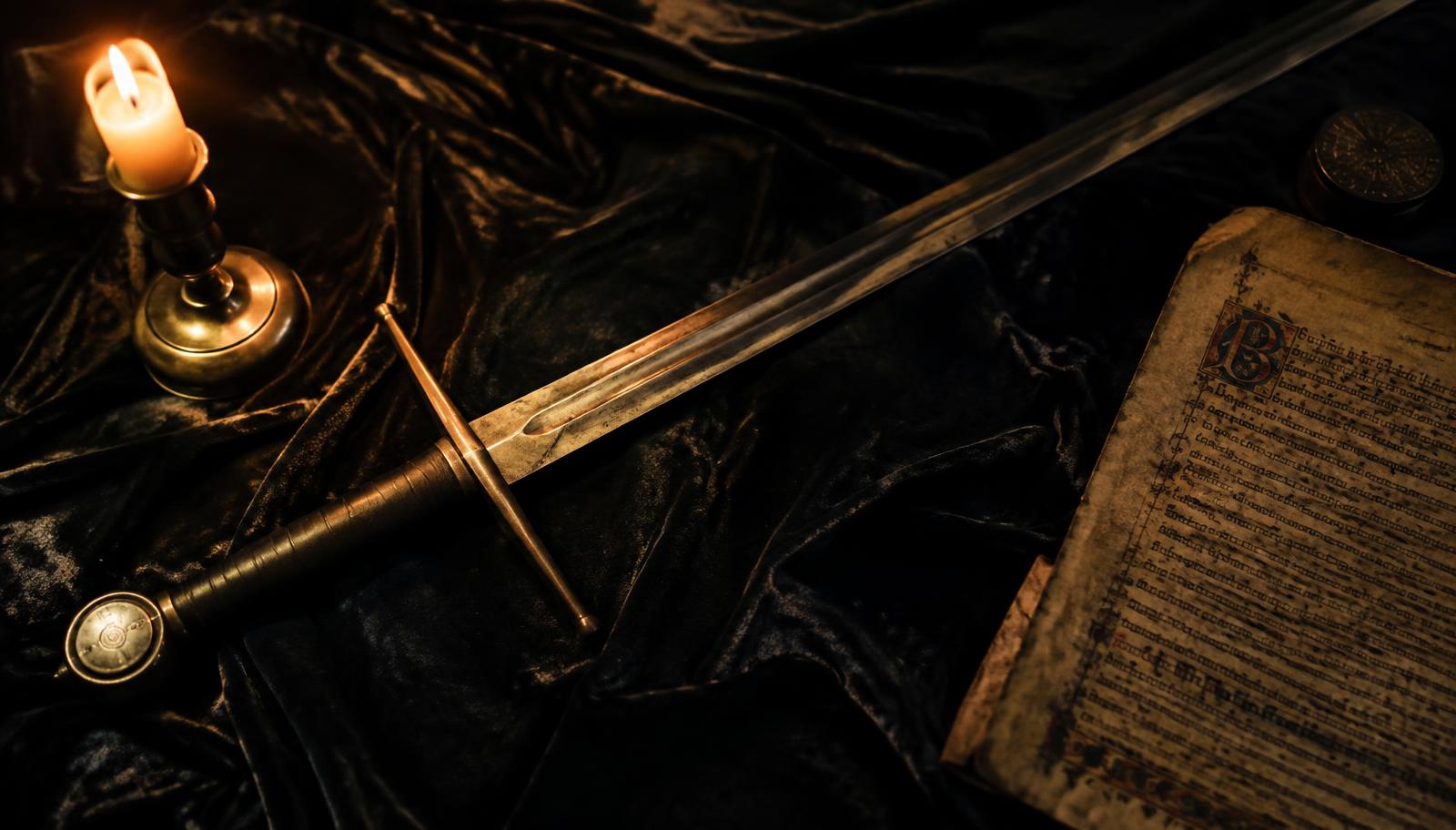
The blade
- Edge — the sharpened side(s). 'True edge' faces the opponent; 'false edge' is the back edge on a double-edged sword.
- Point (tip) — used for thrusting.
- Fuller — a groove that lightens the blade. It is often wrongly called a 'blood groove'.
- Ricasso — an unsharpened section just above the guard on some swords.
- Forte and foible — the strong part near the hilt and the weaker part near the point.
The hilt
- Guard — protects the hand. On European swords the bars are called quillons; on Japanese swords the guard is the tsuba.
- Grip — the handle, often wood wrapped in leather, cord or wire.
- Pommel — the counterweight at the end, which also secures the tang.
The tang
The tang is the part of the blade that runs inside the hilt. On European swords it is commonly peened over the pommel; on Japanese swords it is secured with a bamboo peg (mekugi) [1][2].
Frequently asked questions
Why is it wrong to call the fuller a blood groove?
Its purpose is structural — reducing weight while keeping stiffness — not channelling blood.
Sources
- Encyclopaedia Britannica, “Sword”
- Leon & Hiroko Kapp, Yoshindo Yoshihara, The Craft of the Japanese Sword (Kodansha, 1987) — print book
✍️ Found an error? Report a correction. Written and edited by the SwordPath Editorial Team; not externally expert-reviewed. See our editorial policy.