⚔️ Sword Types
Types of Swords: Names, Designs, Uses and Historical Context
By SwordPath Editorial Team · Published · 11 min read
How swords are classified
There is no single universal classification system. Museums and historians tend to describe a sword by its blade geometry, its hilt and its region and period of origin [1]. For medieval European swords, the most widely used scheme is Ewart Oakeshott's typology (Types X to XXII), which groups blades by profile, cross-section and taper [3].
A useful first split for readers is: straight double-edged blades (often optimised for both cutting and thrusting), curved single-edged blades (often optimised for cutting, especially from horseback), and slender thrusting blades.
Major sword types at a glance
| Type | Region & approx. period | Blade | Typical use |
|---|---|---|---|
| Khopesh | Ancient Egypt & Near East, Bronze Age | Sickle-shaped, bronze | Hooking and cutting |
| Gladius | Roman Republic & Empire | Short, straight, double-edged | Close-formation infantry thrusting and cutting |
| Viking-age sword | Northern Europe, c. 8th–11th c. | Straight, double-edged, broad fuller | One-handed use with a shield |
| Arming sword | Europe, c. 11th–15th c. | Straight, double-edged, cruciform hilt | One-handed, often with a shield |
| Longsword | Europe, c. 14th–16th c. | Straight, double-edged, long grip | Two-handed cutting and thrusting |
| Zweihänder | German lands, 16th c. | Very long, often with a ricasso | Specialist infantry weapon |
| Rapier | Europe, late 16th–17th c. | Long, slender, complex hilt | Civilian thrusting and duelling |
| Sabre | Widespread, esp. 18th–19th c. | Curved, single-edged | Cavalry cutting |
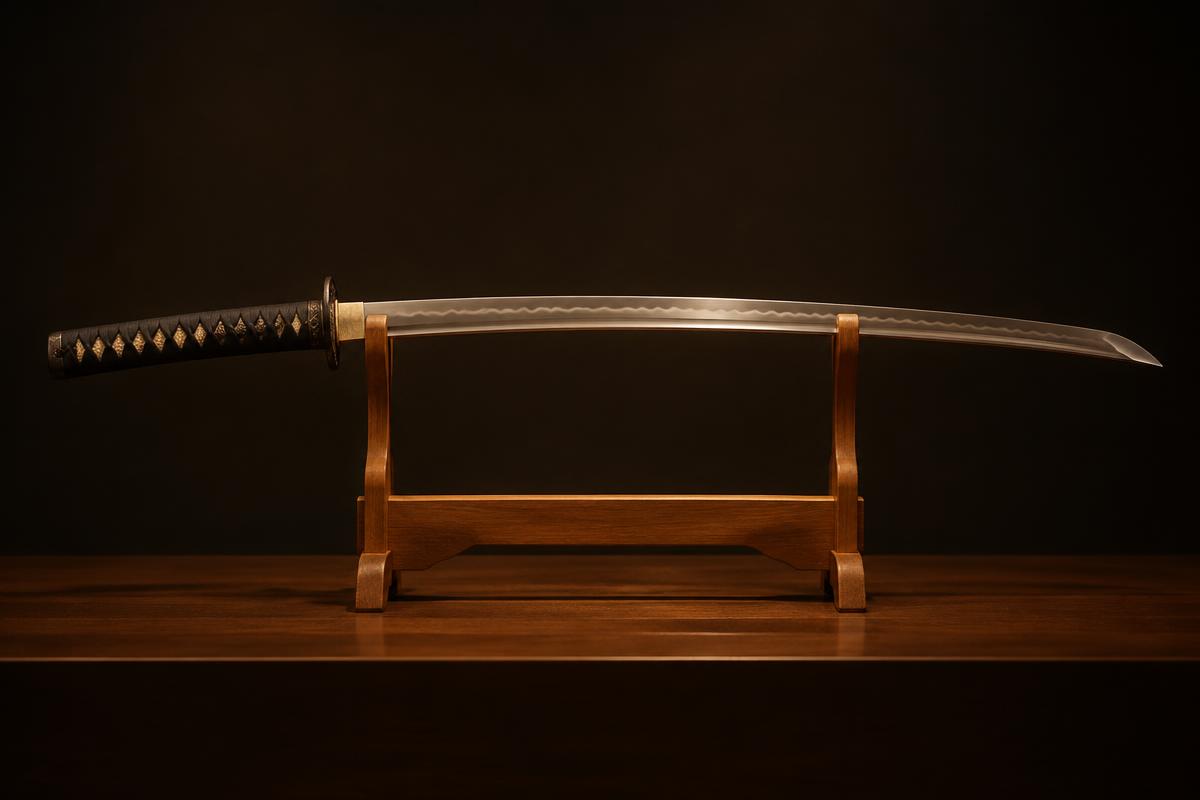
| Katana | Japan, from c. 15th c. | Curved, single-edged, differentially hardened | Cutting; worn edge-up |
| Jian | China, ancient to modern | Straight, double-edged | Precise cuts and thrusts |
| Dao | China | Single-edged, often curved | Cutting; widely used military sidearm |
Dates are approximate. Sword forms overlapped for long periods and regional variants were common, so treat any single date as a guide rather than a hard boundary [1][2].
Straight double-edged swords
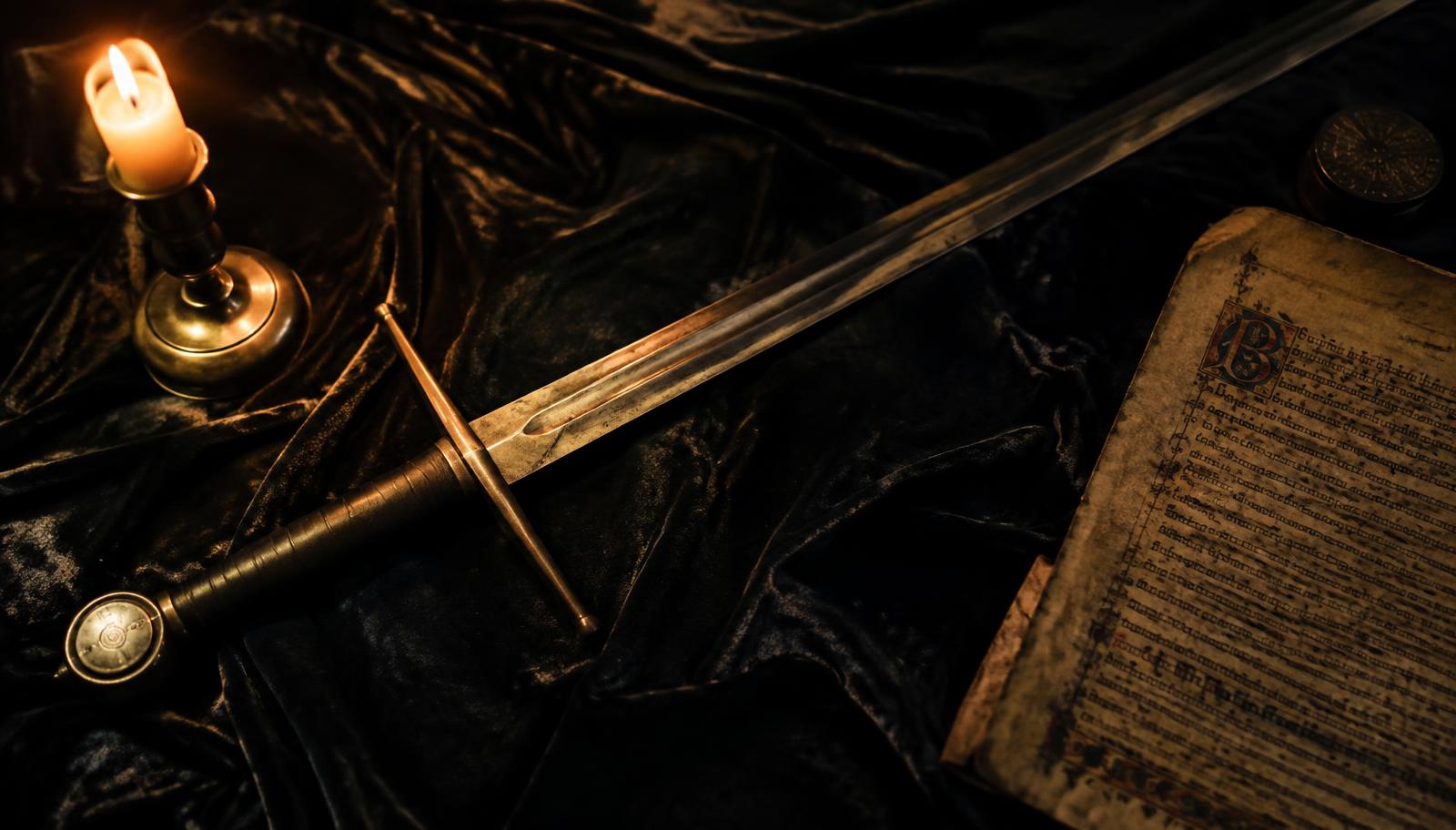
The European knightly sword, often called an arming sword today, was a one-handed weapon with a simple cross-shaped guard. Over the 13th and 14th centuries, as plate armour spread, many blades became more acutely pointed and stiffer in section, better suited to thrusting at gaps in armour [3].
The longsword lengthened the grip to allow two hands. Surviving German and Italian fencing manuscripts from the 14th–16th centuries show that it was used with sophisticated technique, not as a crude club — a common misconception [2].
Curved single-edged swords
Curved blades concentrate cutting force along a drawing motion, which suits mounted combat. Sabres of many kinds appear from Central Asia to Europe; in the 18th and 19th centuries they became the standard cavalry weapon in many armies [5].
The Japanese katana is curved and single-edged, and is traditionally made with a hard edge and a softer spine, producing the visible hamon (temper line) [4].
Thrusting swords
The rapier was a long, slender sword associated with civilian dress and duelling in the late 16th and 17th centuries. Its elaborate hilt protected the hand, since civilians rarely wore gauntlets [6]. The later smallsword was lighter still.
What this overview cannot tell you
Names like “broadsword” and “claymore” are used loosely and inconsistently, both historically and today. Where a term is ambiguous, our articles explain the competing usages rather than pretending there is one correct answer.
Frequently asked questions
What is the most common type of sword in history?
There is no reliable count of swords made across history, so we can't honestly name a 'most common' type. Straight double-edged swords and curved sabres were both extremely widespread.
Is a broadsword the same as a longsword?
Not necessarily. 'Broadsword' is used loosely; historically in Britain it often referred to basket-hilted military swords of the 17th–18th centuries rather than medieval longswords.
Sources
- Encyclopaedia Britannica, “Sword”
- The Metropolitan Museum of Art, Arms and Armor collection
- Ewart Oakeshott, The Sword in the Age of Chivalry (Boydell Press, rev. ed. 1994) — print book
- Encyclopaedia Britannica, “Katana”
- Encyclopaedia Britannica, “Saber”
- Encyclopaedia Britannica, “Rapier”
✍️ Found an error? Report a correction. Written and edited by the SwordPath Editorial Team; not externally expert-reviewed. See our editorial policy.